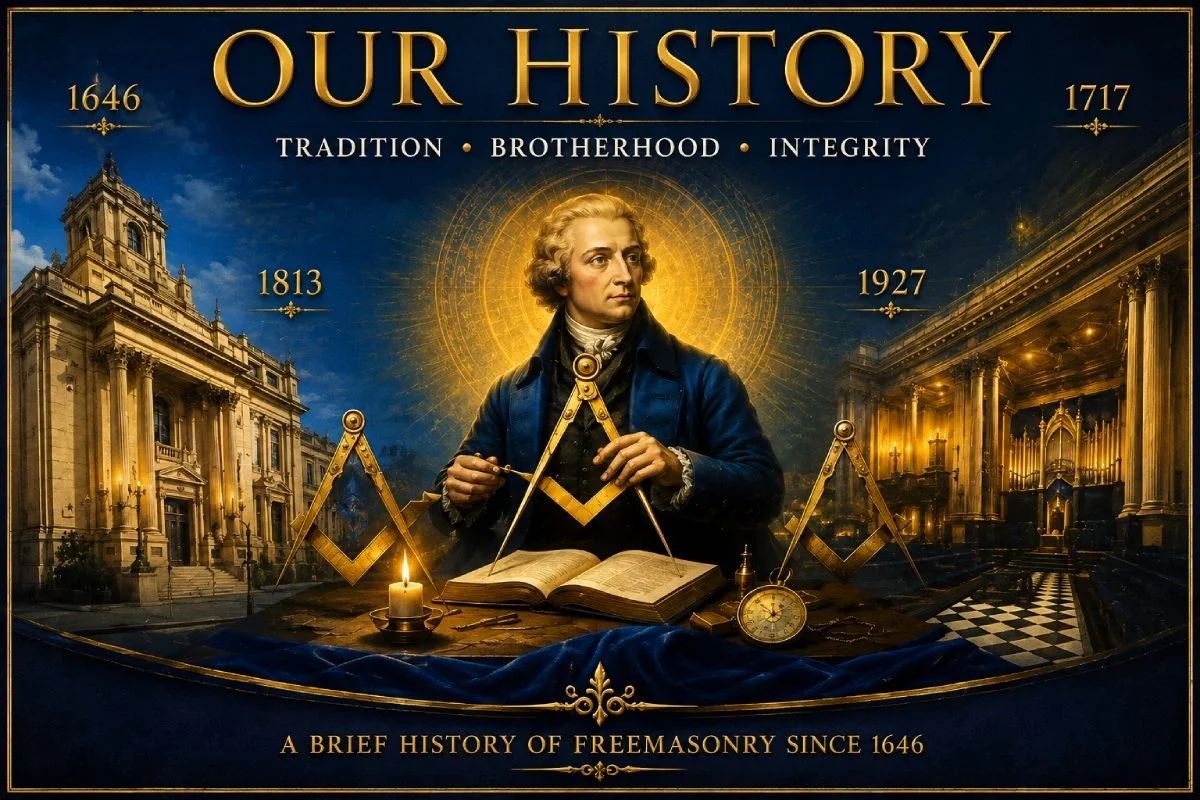
A Brief History of Freemasonry Since 1646
1646 - One of the Earliest Recorded English Freemasons
The diary of antiquarian Elias Ashmole records that he was admitted into a Masonic Lodge at Warrington in 1646. His account is regarded as the earliest known record of an English speculative Freemason being initiated, although Freemasonry’s origins stretch further back and remain the subject of historical debate.
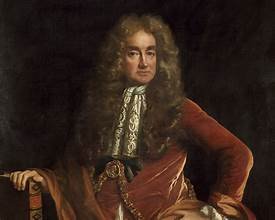
Elias Ashmole
1717 - The First Grand Lodge
On 24 June 1717, four established London Lodges met at the Goose and Gridron Tavern near St Paul’s Cathedral. Together they formed the world’s first Grand Lodge, making an important step towards the organised Freemasonry we recognise today.
1723 - The Constitutions of the Freemasons
The first edition of The constitutions of the Freemasons was published in 1723. It helped establish the principles, organisation and rules of the growing fraternity and became an important influence on the development of modern Freemasonry.
1751 - Two Grand Lodges
A second Grand Lodge was established in London. The two organisations became known as the “Moderns” and the “Antients” and existed alongside one another for more than sixty years
2017 - Three Hundred Years of Grand Lodge
English Freemasonry celebrated the 300th anniversary of the formation of the first Grand Lodge with events throughout the country and the major celebration at the Royal Albert Hall.
1813 - The United Grand Lodge of England
On 27 December 1813, the two rival Grand Lodges united to form the United Grand Lodge of England. The historic union helped standardise the organisation and practice of English Freemasonry.
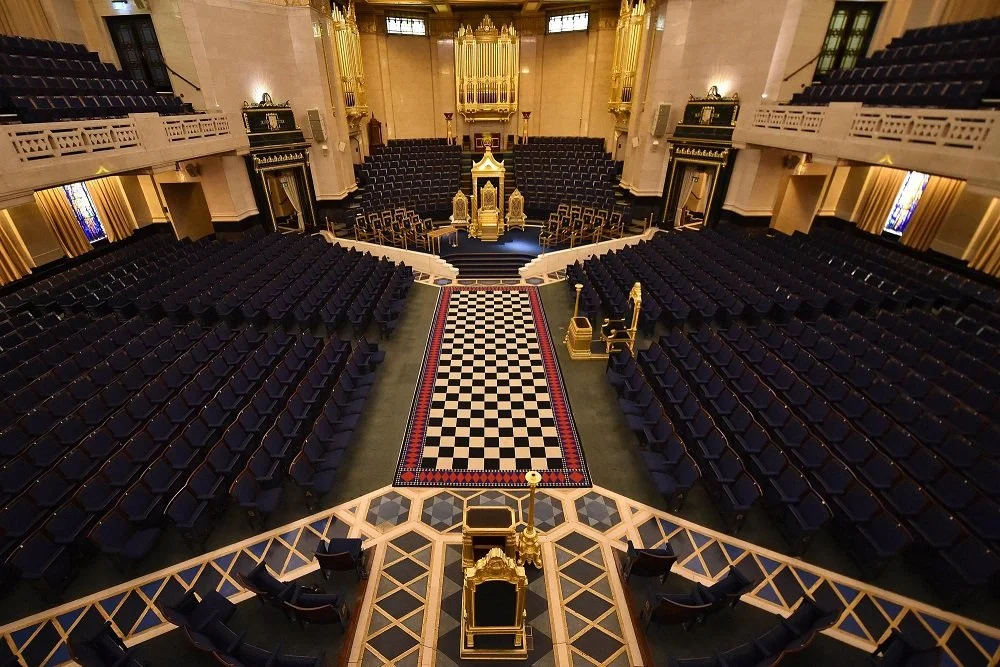
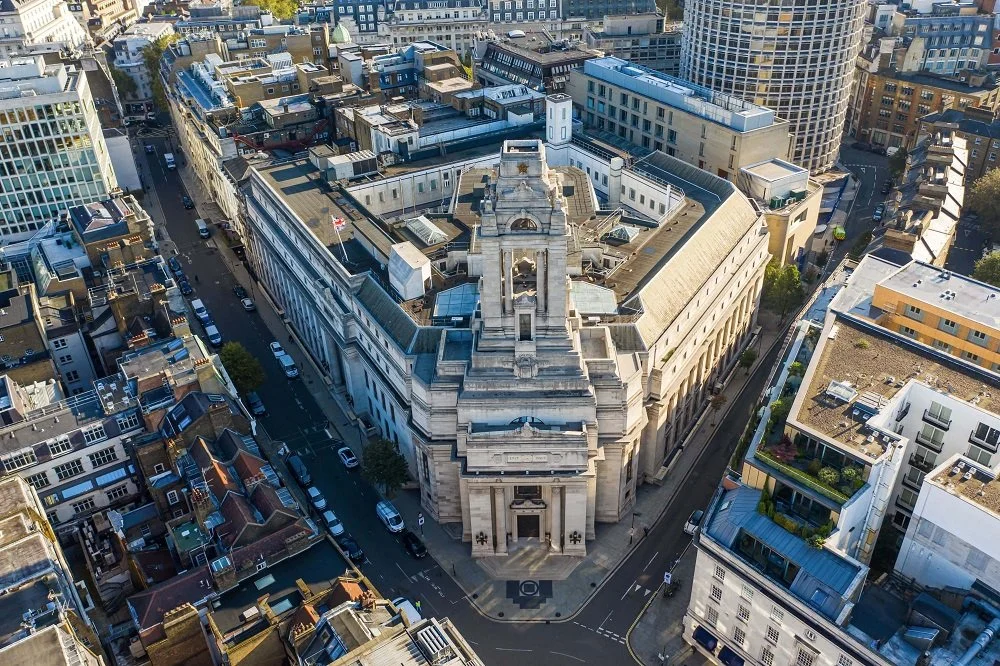
1927-1933 - Freemasons’ Hall
The present Freemasons’ Hall in Great Queen Street, London was built as a memorial to the thousands of Freemasons who lost their lives during the First World War. Today it remains the headquarters of English Freemasonry.